
Dancing Cats - Cute Music Game
Cobby LabsMusic
4.61.25K Reviews
- Version
- 0.5.8
- Installs
- 50.00M
- Age Rating
- Everyone
Screenshots
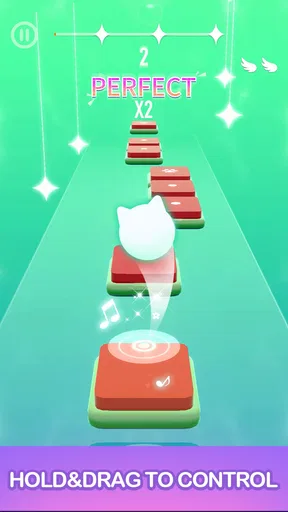
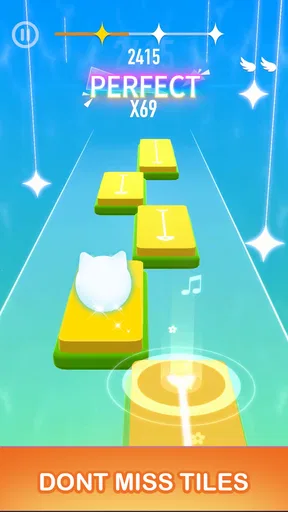
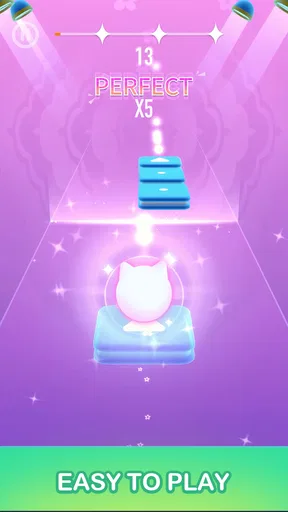
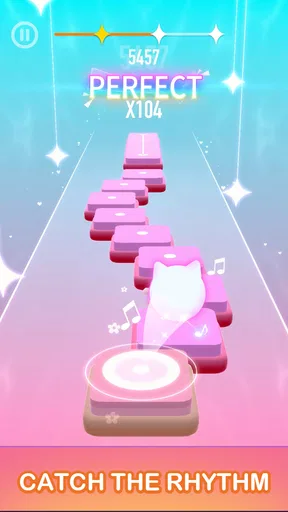

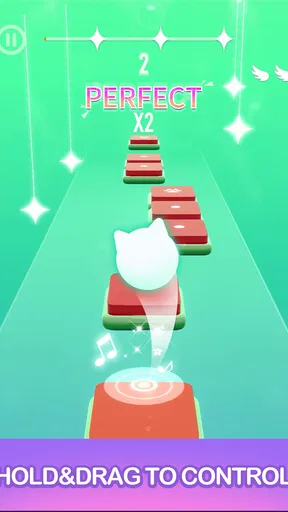
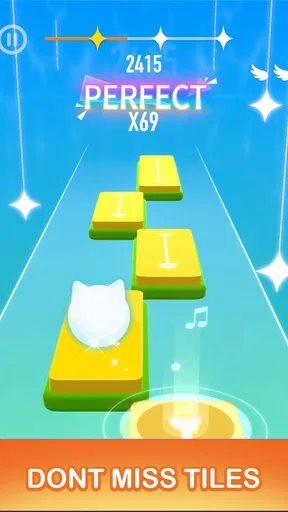
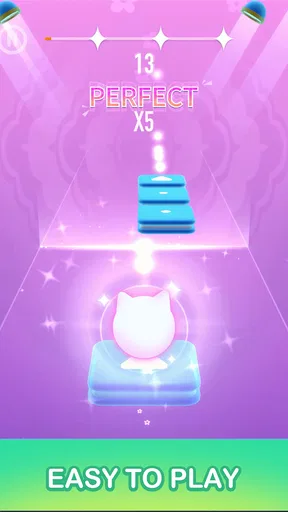
Our Review of Dancing Cats - Cute Music Game
 Analysis by Appyee
I picked up Dancing Cats - Cute Music Game expecting a light rhythm game, and that is exactly where it works best: as a cheerful, quick-play experience built around cats, piano-tile tapping, and songs that ask you to react rather than plan complicated moves. The presentation is playful without requiring a large time commitment, so I can open it for a few minutes when I want something more active than scrolling but less demanding than a full strategy or action game.
It is a free music game from Cobby Labs, available for Everyone and listed for devices running Android 7.0 or later. The current version is 0.5.7. Its audience is easy to understand: people who enjoy cute animal themes, simple rhythm challenges, and short sessions where the main satisfaction comes from keeping a clean streak. I would not describe it as a replacement for a serious music-training app, but it does a good job of turning familiar piano-tile ideas into a cat-focused arcade experience.
How the first sessions establish a reason to keep playing
The opening appeal is immediate. The cats give the game a friendly identity, while the tile layout makes the basic objective readable almost at once: keep your attention on the path, tap in time, and avoid losing the rhythm. I did not need a long explanation to understand what the game wanted from me. That matters in a casual title, because any delay between opening the app and doing something enjoyable can make a small game feel heavier than it should.
The early goal is not complicated, and that is a strength. I am mainly trying to finish a song cleanly, improve my timing, and see whether I can handle the next sequence without breaking concentration. The visual theme supplies the charm, but the actual reason to repeat a stage is performance. A familiar track can feel different when I am trying to replace a messy attempt with a smoother one.
That loop suits short breaks especially well. Imagine waiting for a takeaway order or sitting on a bus with a few spare minutes. I can play a quick round, put the phone away, and return later without needing to remember a complicated story or a large set of controls. The game is more successful as a pocket-sized reflex challenge than as something I would schedule an entire evening around.
The cat theme also makes the first impression less severe than many rhythm games. Some music titles present themselves as highly competitive from the start, with dense menus and an intimidating focus on perfect scores. Here, the cute presentation lowers the barrier to entry. I can make mistakes without feeling that I have failed at a serious test, then try again because the next attempt feels achievable.
What progress feels like when the goal is performance
One of the more interesting parts of this kind of design is that progress is felt through my hands before it is felt through any visible reward. At first, I concentrate on individual taps. After a few attempts, I begin anticipating the pattern and watching farther ahead. That shift is a useful progress signal: I am no longer reacting to every tile as an isolated problem, but reading the flow of the track.
For me, the best personal target is consistency rather than speed. Rushing a section because I want to finish quickly usually creates more errors. A better approach is to keep a steady rhythm, use the center of each tile as a visual anchor, and let the next movement come into view before I commit to the current one. That small change makes the game feel more controlled and gives repeated attempts a practical purpose.
The app’s large audience suggests that the basic formula has broad appeal. It has reached over 50 million installs, and its average rating is 4.6 from around 156 thousand ratings. I see those figures as evidence that the simple cat-and-tile concept connects with many players, but they do not change the central question for me: whether the moment-to-moment tapping remains enjoyable after the novelty fades.
That is where the player has to create some of the structure. If I only play until I clear a song once, the experience can feel brief. If I treat each attempt as a timing exercise and set a small personal objective, such as finishing with fewer mistakes or staying calm through a difficult passage, the same content has more staying power. This is not a game I would choose for a deep progression system; I choose it for the satisfaction of gradually becoming cleaner and more reliable.
A useful habit is to stop immediately after a particularly poor run instead of tapping through frustration. Rhythm games can make a player tense, and tension leads to early taps, missed tiles, and repeated mistakes. Taking a short pause helps preserve the relaxed tone that the cat theme promises. I found that the game is more enjoyable when I treat retries as focused experiments rather than punishment.
Where the challenge starts to matter
The difficulty curve works best when it asks for better attention rather than forcing a completely different style of play. Early sections let me settle into the timing. As patterns become less comfortable, I have to divide my attention between the tile under my finger and the path that is about to arrive. That is the point where a cute casual game becomes a genuine reflex test.
Players who already spend time with piano-tile games may find the opening familiar. The appeal for them is not discovering a new control scheme, but seeing how the music and cat presentation make the familiar format feel lighter. Newcomers, meanwhile, can use the first sessions to learn an important rhythm-game skill: looking ahead instead of staring only at the current tap.
I would advise beginners to keep their hands relaxed and avoid gripping the phone too tightly. A rigid grip makes quick taps less precise and can make longer sessions uncomfortable. It also helps to play in a quiet enough place to follow the rhythm and visual movement. This is not because the game demands professional equipment; it is because distractions quickly become mistakes when the screen is asking for repeated timing decisions.
The challenge is also affected by the device itself. A smaller screen can make the play area feel cramped, while a larger display may give my eyes more room to track what is coming. I would not choose a device for this game alone, but if I am deciding where to play, a stable grip and a clear view are more useful than raw power. The minimum operating-system requirement is modest, yet comfort still matters more than specifications once the game is running.
There is a trade-off here. A straightforward rhythm design is easy to understand, but it may not offer enough variety for someone who wants elaborate musical mechanics, complex note types, or a long-form campaign. Dancing Cats is better suited to players who enjoy polishing reactions within a familiar format. If I want a game with a broad strategic layer, character-building decisions, or a substantial narrative, I would look elsewhere.
Does the pacing encourage healthy repeat play?
The pacing is built around quick feedback. I make a run, immediately know whether my timing held together, and can decide whether to try again. That creates a naturally tempting loop because there is little preparation between attempts. I do not have to rebuild a team, study a large menu, or wait for a long setup before testing myself again.
That convenience can work in two directions. It is excellent when I want a brief distraction, but it can also encourage me to repeat a difficult section longer than I intended. My practical solution is to decide on a stopping point before I begin, such as playing during one short break rather than continuing until I finally get a perfect-feeling run. The game is most pleasant when it fills spare time instead of quietly taking over the time I planned for something else.
The free price makes experimenting easy. I can recommend it to a friend who is unsure about rhythm games because there is no purchase decision standing between curiosity and the first attempt. At the same time, free casual games often compete for attention through repetition, and that means the player should judge the long-term value by enjoyment rather than by the number of times the app can be reopened.
For children and families, the Everyone age rating and friendly visual direction make the game approachable. I would still suggest that younger players use it with sensible screen-time boundaries, not because the controls are difficult, but because short retry loops can make “one more attempt” surprisingly easy to say. The game works well as a shared challenge too: one person can try a section, then pass the phone to someone else and compare how each player handles the same rhythm.
For adults, the strongest use case is decompression. After a long day, I may not want a complex game that asks me to remember objectives or manage resources. A few rounds of tapping can provide a small mental reset. It is active enough to hold my attention, but simple enough that I do not need to invest in a fictional world before enjoying it.
How it compares with ordinary rhythm-game alternatives
Compared with a standard piano-tile game, the main distinction is personality. The cat-focused presentation gives the familiar tapping format a warmer, more playful identity. If I normally find plain tile games visually interchangeable, the dancing cats provide a reason to choose this particular version. The theme is not a substitute for strong timing, but it makes the experience easier to recommend to someone who responds to character and humor.
Compared with larger music games, this one is less suitable for players seeking a wide musical catalog, extensive customization, or a competitive ecosystem. A more elaborate rhythm title may provide deeper long-term goals and a stronger sense of collection or mastery. I would choose that alternative when music variety and layered progression matter more to me than instant simplicity.
Compared with non-music casual games, Dancing Cats has a more active mental demand. A matching game may let me pause and think, while this asks me to respond continuously. That makes it a good choice when I want my break to feel engaging rather than passive. It is a poor choice when I am tired, distracted, or unable to give the screen steady attention, because the same simplicity that makes it accessible also leaves little room for careless play.
The developer, Cobby Labs, has positioned the game around a clear central idea rather than a complicated genre blend. I appreciate that focus. The risk is that players who need constant novelty may notice the limits sooner than those who enjoy refining timing. In my experience, the game’s value depends less on discovering a large number of systems and more on whether the basic rhythm remains satisfying after the first cute impression.
Who should install it, and who should pass?
I would recommend it to someone who likes cats, wants a free music game, and prefers sessions that can begin immediately. It is especially suitable for casual players who enjoy chasing a cleaner run without needing a deep tutorial or a long story. It also makes sense as a first rhythm game for a player who wants to learn the basics of visual timing in a low-pressure setting.
I would be more cautious recommending it to someone who expects a full musical instrument experience. Tapping tiles in rhythm can improve attention and coordination, but it is not the same as learning notes, scales, or real performance technique. I would also steer away players who need a strong narrative, detailed strategy, or a large progression framework to stay interested.
Another group that may want a different option is anyone who dislikes retry-based games. The central pleasure comes from attempting a sequence, noticing where timing broke down, and trying again. If that loop feels repetitive rather than motivating, the cute art will not solve the underlying mismatch. The game is honest about its appeal through its simplicity: it wants me to play the rhythm, not manage a large adventure.
Before installing, I would make sure my device meets the Android requirement of version 7.0 or newer. The game is free to start, and its Everyone rating makes it broadly accessible, but those points should not be confused with unlimited appeal. The right question is whether I enjoy quick musical reflex tests. If the answer is yes, the low entry barrier makes it easy to try.
My verdict after weighing the loop
The strongest reason to play is the combination of immediate controls and a distinctive cat personality. The early goals are clear, the progress signals come from improved timing, and the challenge grows naturally as I try to read patterns with less hesitation. That creates a satisfying small-scale mastery loop, even though it does not aim for the depth of a larger music game.
I also like that the game can fit several real situations: a short commute, a waiting room, a quick break, or a casual hand-to-hand challenge with a friend. The best way to get more from it is to play with a specific intention, such as practicing calm taps or improving consistency, rather than endlessly repeating rounds without noticing what went wrong.
Its main limitation is equally clear. Once the novelty of the cats and the basic rhythm format has settled, players who need extensive variety may find the experience too narrow. The pacing encourages repeat play, but the long-term appeal depends heavily on personal satisfaction with timing improvement. That is not a flaw for a compact casual game, but it is an important distinction from more ambitious music titles.
With around 1.3 thousand written reviews and more than 50 million installs, the game has clearly found a substantial audience. I understand why: it is approachable, cheerful, and easy to pick up. I would install Dancing Cats - Cute Music Game when I wanted a friendly rhythm challenge rather than a deep game, and I would recommend it to anyone who enjoys cute presentation with a little pressure behind every tap. For that specific purpose, it earns its place on my phone.
Privacy and Permissions
See what permissions an app requests and how it handles your data.
- Wi-Fi connection information
- view Wi-Fi connections
- Other
- view network connections, full network access, control vibration, prevent device from sleeping, Google Play license check
Verdict
Strengths of Dancing Cats - Cute Music Game
- Simple tap-based controls are easy for children and casual players.
- Bright cat animations make each song feel lively and entertaining.
- Short levels are convenient for quick gaming sessions.
- Unlockable cats add a small incentive to keep playing.
- Music timing helps improve focus and hand-eye coordination.
Limitations of Dancing Cats - Cute Music Game
- Some songs or cats may require in-app purchases to unlock.
- Repeated levels can become predictable after extended play.
- Fast sections may feel difficult for younger players.
- Ads may interrupt gameplay, especially in the free version.
- The game may need extra storage for downloaded music and assets.
Other Releases by Cobby Labs
View All
Rolling Twins: Music Ball Rush
Music4.6

Piano Hop - Music Jump Ball
Music4.5

Goods Master 3D: Puzzle Games
Casual3.9

Pop Piano: Music Games
Music4.6
Similar Picks in This Category
View All
Tiles Hop Music & Ball Game
AMANOTES PTE. LTD.4.3

Magic Tiles 3™ - Piano Game
AMANOTES PTE. LTD.4.6

Real Piano
Bilkon3.7

Piano Game: Classic Music Song
Dream Tiles Piano Game Studio4.0

Smash Colors: Music Ball Rush
BADSNOWBALL HONGKONG LIMITED4.2

Piano Music Go-EDM Piano Games
Joy Journey Music Games4.5
Frequently Asked Questions
What is Dancing Cats - Cute Music Game?
Dancing Cats - Cute Music Game is a casual rhythm game in which you guide adorable cat characters through colorful musical levels. The main goal is to tap, swipe, or follow the beat as songs play, helping the cats move along the track while avoiding mistakes. It combines simple controls, cheerful visuals, and short sessions suitable for quick entertainment.
How do you play Dancing Cats - Cute Music Game?
Gameplay is based on timing and rhythm. As the music progresses, notes, obstacles, or movement cues appear on the screen, and you must interact at the right moment to keep the cat dancing successfully. The controls are generally easy to understand, making the game accessible to beginners, although faster songs and more demanding patterns can require concentration and practice.
Is Dancing Cats - Cute Music Game free to download and play?
The game can generally be downloaded for free, but availability of optional in-app purchases may depend on the version and platform. These purchases can include extra songs, cosmetic items, characters, lives, or other progression-related content. Players should review the store listing before downloading and check device purchase settings, especially if children may use the application.
Does Dancing Cats - Cute Music Game require an internet connection?
An internet connection may be needed for the initial download, updates, advertisements, synchronization, or access to certain music and events. Some previously available levels may work offline, but this can vary according to the version installed and the device. For the most reliable experience, connect to Wi-Fi when downloading new content and check the game’s behavior before playing without mobile data.
Is Dancing Cats - Cute Music Game suitable for children?
The cute animal characters, bright graphics, and straightforward rhythm mechanics make the game appealing to many children and casual players. However, parents should review the age rating, advertising, privacy information, and in-app purchase options before allowing unsupervised play. Rhythm games may also encourage repeated attempts, so setting reasonable screen-time and purchase limits is recommended.
Play our best games!


